
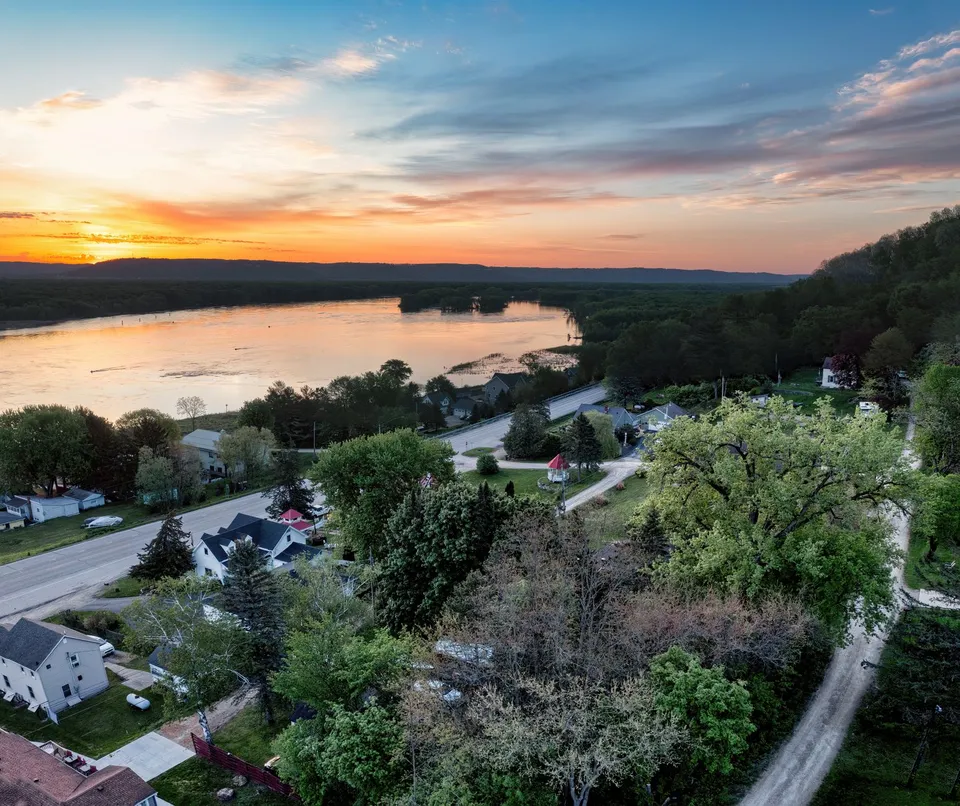
A shift at the mill, a clinic visit, a school pickup, and a bus ride all happen inside the same small labor market here. That matters because in International Falls, a job is rarely just a job description; it is part of a larger local system that has to keep moving before, during, and after work hours. The clearest examples are the Boise Paper operation, Rainy Lake Medical Center, International Falls School District 361, and the local transportation network that ties the city to Ranier and the rest of Koochiching County.
1. The mill is a process ecosystem, not a single building
The Boise Paper division of Packaging Corporation of America in International Falls is one of the best examples of how work really functions here. Boise says the mill has made paper for nearly 115 years, produces more than 500,000 tons annually on two paper machines, and operates as an integrated pulp and paper facility. The same company page also describes a dam with hydroelectric generation, a water filtration plant, and primary and secondary waste treatment systems. In other words, the mill is not just a production floor; it is a network of machinery, utilities, environmental systems, logistics, maintenance, and safety functions that depend on one another every day. That is why people with backgrounds in equipment repair, electrical work, instrumentation, process control, industrial safety, shipping, and maintenance often fit this kind of employer well.
That industrial footprint also explains why the county’s employment mix looks the way it does. Koochiching County’s documented top sectors include manufacturing, accommodation and food services, retail trade, and public administration, which means the local economy is broader than a single employer even when the mill remains central. For applicants, that is useful because a plant skill set can often translate into other local roles with similar reliability and troubleshooting demands. For employers, it means the labor pool already understands shift work, physical systems, and the reality that one department’s schedule can affect another’s.
2. Public services are part of the job market too
International Falls and nearby Ranier show how much the area depends on public systems. The City of International Falls says its street, water, sewer, fire, and EMS functions are not abstract government services; they are the operating backbone that keeps households and businesses functioning. The city’s fire and EMS coverage even extends to surrounding areas, including Ranier and Ray through a rural fire protection contract. Ranier’s own public works model is smaller and more interdependent, with water, sewer, streets, and parks handled through a mix of local staff and contracts. That makes public-sector and quasi-public work an important hiring lane for people who can handle equipment, communication, maintenance, and service under real-world conditions.
Healthcare works the same way. Rainy Lake Medical Center describes itself as the Borderland community’s preferred healthcare provider and employer, and its current service page lists a Rainy Lake Clinic in International Falls with weekday hours from 7 a.m. to 7 p.m., a Littlefork clinic open Tuesday and Wednesday, and a Rainy Lake Pharmacy that is open Monday through Friday plus Saturday mornings. The same research notes RLMC as a 25-bed critical access hospital. That matters for work because health care here is not only about clinicians; it also includes scheduling, billing, registration, pharmacy support, environmental services, and other roles that keep a care system functional in a smaller market.
Schools add another layer. International Falls School District 361’s website shows district office functions, registration, new enrollment, transportation and busing, dining information, and employment opportunities, and the district operates Falls Elementary and Falls High. That makes the district more than a place where children spend the day. It is also a household support system and a local employer that creates jobs in teaching, transportation, food service, custodial work, coaching, and paraeducator support. In a town this size, those roles often overlap with family life and evening schedules in ways that larger cities can hide.
3. Getting to work is a practical question, not a side issue
Transportation shapes what counts as a realistic job. Falls International Airport says Delta and SkyWest provide daily nonstop service between International Falls and Minneapolis-St. Paul, and the terminal is open 24 hours a day, 365 days a year. The airport also functions as a U.S. Port of Entry. For workers, that means the community has a real business-travel and out-of-town-access link, which can matter for training, specialist appointments, family travel, and some regional work arrangements.
Local ground transportation matters just as much. Arrowhead Transit’s Koochiching County schedule shows dial-a-ride service inside International Falls city limits Monday through Friday from 7 a.m. to 7 p.m. and Saturday from 9 a.m. to 3 p.m. It also offers some scheduled trips to other communities on limited days. That is useful, but it is not the same thing as a full commuter network. The Census Bureau’s commuting figures help explain why: the mean travel time to work is 8.6 minutes in International Falls and 16.3 minutes in the county. The short city commute reflects how concentrated many local jobs are, while the longer county average is a reminder not to assume that every Koochiching County location is an easy everyday drive from town.
4. What this means for applicants and employers
If you are applying for work here, the best question is often not “What is the job title?” but “What system does this job keep running?” A maintenance role may support the mill. A scheduler may help a clinic or hospital. A driver may connect a school route, a delivery route, or a public-service route. An office role may keep payroll, patient access, or public records moving. That is why transferable skills matter so much in this market: mechanical aptitude, communication, attention to safety, reliability, and the ability to work around weather, shift changes, and multiple responsibilities can matter as much as a single credential.
For employers, the same logic points toward smarter hiring and onboarding. A local worker may already be balancing school schedules, clinic appointments, transit windows, or recurring family responsibilities. Clear shift expectations, practical training, and cross-training can make a real difference in whether someone can stay in a role. That is especially true in a community where many people know the same public systems and where work often depends on relationships built through repeated seasonal or service work. When employers design jobs around the way life actually works here, they usually widen the pool of people who can say yes.
If you are planning a move for work, start by comparing the opening with the systems around it: the clinic, the school district, the airport, the transit schedule, and the kind of utility or plant environment you would be stepping into. Then look at the next practical step on ifallsjobs.com/jobs/ or spend a few minutes with the community page to see how daily life fits together before the first paycheck.