
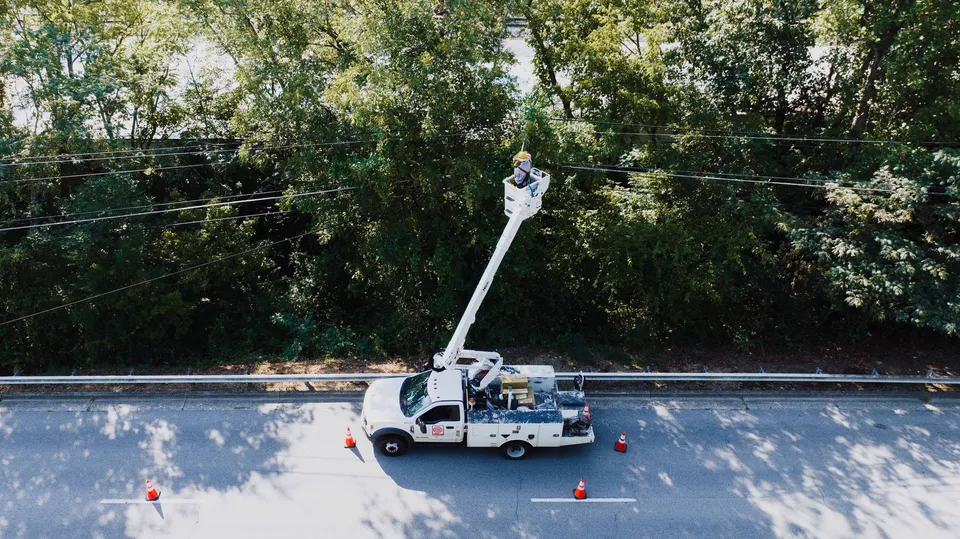
If you are moving for work in Koochiching County, one of the smartest things you can do is look at Ranier first. It is a small community, but its utility and service setup shows how life in this corner of Minnesota really functions: not through one big system, but through a network of shared responsibilities, contracts, and nearby institutions. Ranier says its office is in the Ranier Community Hall and that its public works staff handles water and sewer systems, parks, streets, and alleys. The city also relies on outside agreements for some services, which is a useful clue for anyone choosing housing or planning a commute.
That shared-services model matters because it changes what a newcomer should ask before signing a lease. Ranier’s annexation-area order says the city provides sanitary sewer service through a contract with the East Koochiching County Sanitary Sewer District, owns and operates municipal water service, and gets fire protection through a contract with the Koochiching Rural Fire Protection Association. In other words, the address you choose affects more than your drive time; it affects which public systems support your home. International Falls operates differently, but the city still centralizes key household services such as housing, rental licensing, water and sewer, streets, and parks on its services page.
For job seekers, that distinction is practical rather than academic. International Falls workers had a mean travel time to work of 8.6 minutes, while county workers averaged 16.3 minutes, so this is not a place where everyone commutes from far away every day. Arrowhead Transit helps fill gaps, but it is built for local travel and errands rather than metro-style peak-hour commuting. Its Koochiching County schedule includes dial-a-ride in International Falls Monday through Friday from 7 a.m. to 7 p.m. and Saturday from 9 a.m. to 3 p.m., plus limited out-of-town routes that require advance planning. If you are comparing homes, that means the real question is not just where the cheapest rent is; it is whether the trip to work, school, and appointments fits the way transportation actually works here.
The same logic applies to healthcare. Rainy Lake Medical Center is a critical access hospital, and its clinic pages show how local care is organized around the rhythms of a small region rather than a large metro network. The Rainy Lake Clinic in International Falls lists weekday hours from 7 a.m. to 7 p.m., the Littlefork clinic runs Tuesday and Wednesday, and the Rainy Lake Pharmacy offers weekday and Saturday morning service. For a household settling in for work, that is not just a convenience; it is part of the employment equation. Reliable local care helps workers stay on the job, supports families who are balancing new schedules, and reduces the temptation to treat every appointment as an out-of-town trip.
Families see the same pattern in the schools. International Falls School District 361 lists its office at 1515 11th Street in International Falls and shows the kinds of services new households actually use: registration, new enrollment, transportation and busing forms, dining information, and employment opportunities. The district also operates Falls Elementary and Falls High. That means the school system is not only an employer; it is a household coordination hub. If you are moving with children, the district’s paperwork and transportation choices affect the entire first month, not just the first day of class.
There is also a quieter support network that matters to newcomers and long-time residents alike. The International Falls Public Library lists regular hours and a legal-aid kiosk where county residents can apply for civil legal aid, access legal resources, and attend remote court hearings. Its resources page also points residents toward Koochiching Aging Options, which helps older adults live independently and stay socially connected. In a county with a large older population and many long-established households, those services are part of the daily infrastructure, not extras. They are the kind of institutions that help a town feel livable before a newcomer has learned every road, office, and office-hour exception.
Transportation beyond the daily commute also shapes the relocation picture. Falls International Airport says Delta and SkyWest provide daily nonstop service to Minneapolis-St. Paul, the terminal is open 24 hours a day, 365 days a year, and the airport functions as a U.S. Port of Entry. That matters if your work involves training, specialist visits, visiting family, or occasional travel for meetings. It means the region is rural, but not cut off. At the same time, broadband access is strong enough that many households can realistically consider hybrid work or online support: Census data show broadband subscriptions of 90.2 percent in International Falls and 89.3 percent in Koochiching County.
One more detail helps explain why these systems work the way they do: people here tend to stay put. Census estimates show same-house rates of 84.7 percent in International Falls and 86.8 percent in the county, which helps explain why local hiring often runs through familiar institutions, referrals, and repeat relationships rather than constant turnover. That stability can be a plus for newcomers, because it means the people who answer the phone, approve the permit, or dispatch the bus often know the area well. It also means a move here rewards preparation. Learn the service map before you arrive, not after you need it.
If you are planning a move for work, start with the basics: check your commute, map your utility setup, and confirm which local services you will use first. Then spend a few minutes on the city services page, the transit schedule, and the school or medical pages that fit your household. That small amount of homework will tell you far more about life near International Falls than a generic relocation checklist ever could.