
If you are weighing a job move to International Falls, it is easy to focus on the city itself and overlook the place just down the road that changes daily life in a very practical way: Ranier. The two communities are close, but they do not feel identical. International Falls carries the fuller civic stack—city utilities, housing and rental licensing, parks, street work, and the larger healthcare and school systems—while Ranier runs on a lighter, more interdependent set of services. That difference matters when you are choosing where to live, how long errands will take, and what kind of routine you can realistically maintain after work.
Ranier is small, but it is not simple
Ranier’s own administration page says the city office is in the Ranier Community Hall, and that public works staff handle water and sewer systems, parks, streets, and alleys. The same local material shows that sewer service comes through a contract with the East Koochiching County Sanitary Sewer District, water is municipally owned and operated, and fire protection comes through a contract with the Koochiching Rural Fire Protection Association. In other words, Ranier is not a place where every service is built out independently; it is a place where local government depends on shared systems and agreements.
That matters to workers because a home in Ranier can mean a different relationship to utilities, emergency response, and civic access than a home in International Falls. It is not better or worse by default. It is just a different kind of daily setup. For someone starting a new job, that can affect how you think about maintenance, winter planning, and the convenience of getting basic household tasks done after business hours.
The lakefront identity is part of the economy, not just the scenery
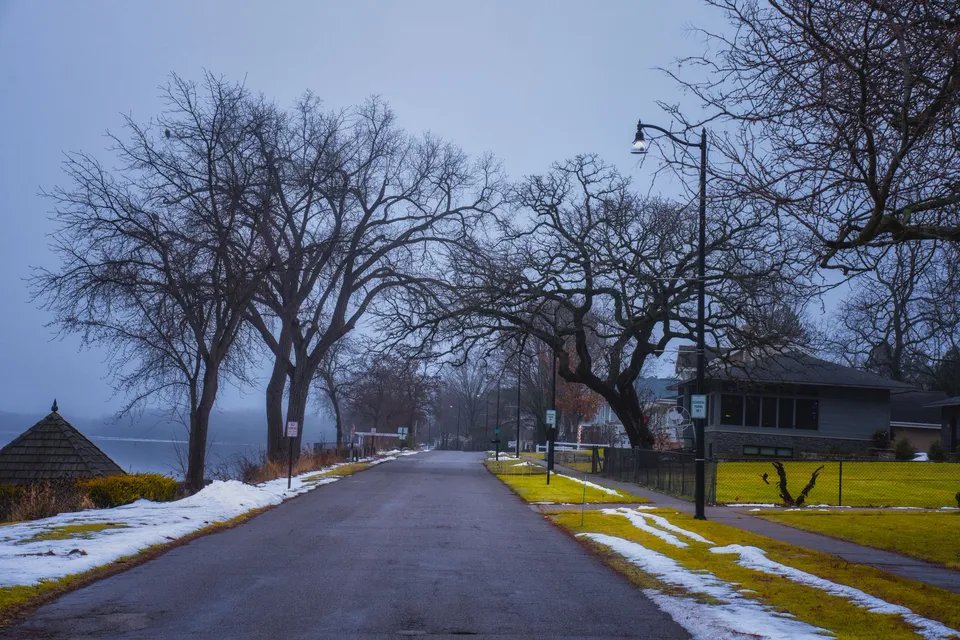
Ranier’s tourism page describes it as a village on the shore of Rainy Lake, where Rainy River begins its westward course to Lake of the Woods. The page also notes that the community historically supported commercial fishing, outfitting, timber cruising, and trade service for Native American and First Nation populations in the watershed. Today, the same area still has resorts, seasonal cabins, an RV park, a distillery, and a brewpub. That tells you something important: Ranier is not just a map dot near International Falls. Its shoreline setting still shapes how people gather, spend, and work.
For newcomers, that can be a real advantage. If you want a quieter setting than the city core, but still want to stay close to work, Ranier offers a different rhythm. The tradeoff is that the local system is smaller, so you are more likely to lean on neighboring services, planned trips, and a shorter list of nearby errands. That is a useful reality check, not a warning label. It simply helps you decide whether you want convenience, quiet, or a mix of both.
International Falls fills in the everyday gaps
International Falls is where the broader service network becomes easier to see. The city’s services page includes housing, rental licensing, water and sewer, street work, and parks functions. It also points to local recreational spaces such as Burlington Park, Carson Lupie City Beach, Eighth Street Park and Rink, Green Acres Park, Holler Rink, and ball fields. That matters because a move for work is not only about the shift schedule; it is also about whether you can quickly solve ordinary life problems after hours and whether you have free places to reset on days off.
The city’s public institutions also do a lot of the unseen work that makes a move easier. International Falls School District 361 handles registration, new enrollment, transportation and busing, dining information, and employment opportunities, while Rainy Lake Medical Center lists the local clinic, the Littlefork clinic, and the pharmacy hours that include Saturday service. The International Falls Public Library adds regular hours and a legal-aid kiosk in its meeting room. If you are relocating with a family, or you simply want a place where errands, healthcare, and information are close together, those details matter more than a generic “small-town feel.”
Commute reality is local, but not all local is the same
A lot of people assume Koochiching County is one small commute zone. The data suggest a more careful view. International Falls workers had a mean travel time to work of 8.6 minutes, while county workers averaged 16.3 minutes. That gap is a reminder not to treat the whole county as one easy radius from every workplace. A job in International Falls can feel very different from one in a surrounding community, even if the drive looks short on a map.
Transportation options reflect that same pattern. Falls International Airport provides daily nonstop service to Minneapolis-St. Paul, and Arrowhead Transit offers local bus transportation in International Falls and Koochiching County, including dial-a-ride inside the city limits on weekdays and Saturdays, plus some limited out-of-town routes on specific days. The system is useful, but it is not the same as a big-city transit grid. For a worker, that means your schedule and your address still matter a lot.
What this means if you are choosing where to land
If you are moving for work, the smartest question may not be “International Falls or Ranier?” It may be “What kind of daily routine do I want to support?” International Falls gives you more of the city services, health and school infrastructure, and public facilities that make a household easier to run. Ranier gives you a smaller, shoreline-centered community with its own identity and a lighter service structure. Both can work, but they work differently.
The best next step is simple: compare the city services page, the Ranier administration page, and the local transit options before you choose housing. That quick check can tell you more about your day-to-day life here than a dozen generic relocation tips ever will.